Drivers fear a speed limiter will make their truck sluggish. It does not. It only stops the one thing that kills: going too fast.
Here is what actually happens under the bonnet, why your power is untouched up to the limit, and whether the device can be beaten.
What happens under the bonnet
A speed limiter works through the engine, not the brakes.
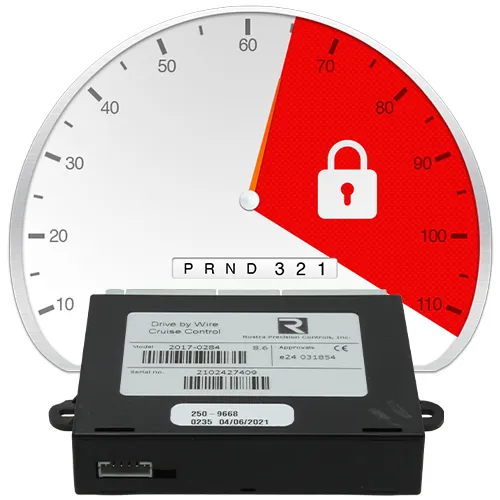
Sensors constantly measure how fast the vehicle is moving and feed that to the engine's computer, which controls nearly everything the engine does.
The moment the vehicle reaches its preset top speed, the computer eases back the air, fuel and spark, so it simply cannot accelerate past that point.
No drama, no jolt, just a ceiling the vehicle will not cross.
It does not cut your power
This is the part drivers get wrong.
Below the limit, the vehicle drives exactly as it always did. Full acceleration, full pulling power up a hill, full response.
The limiter only acts at the top, capping the maximum speed while leaving everything underneath it alone.
You lose nothing except the ability to do the speed that causes the worst crashes.
A speed limiter does not make a vehicle weaker. It makes a fast vehicle survivable.
Set to your vehicle's limit
The ceiling is not the same for every vehicle.
At installation, the device is calibrated to the limit for your vehicle's category under FRSC rules, which is lower for heavy articulated trucks and tankers than for buses and lighter commercial vehicles.
That calibration is part of a proper installation, and getting it right is one reason it must be an approved vendor.
Can it be tampered with
People ask, so let us answer plainly.
The unit is sealed at installation and monitored by the FRSC, and tampering with it is an offence that voids your certificate.
So a driver who defeats the limiter is not just unsafe, they have made the vehicle non-compliant and the operator liable.
A properly fitted, sealed unit is meant to stay exactly as the installer set it.
Fit one the right way
As an FRSC-approved installer we calibrate it to your vehicle and issue the certificate. Get a quote.
See our speed limiter serviceWhy it is worth having anyway
Forget the law for a second. The device earns its place on safety alone.
Capped speed means shorter stopping distances, fewer and less severe crashes, and lower fuel and wear over time.
For a fleet it also pairs with driver-behaviour monitoring, so you can see and coach the rest of the driving, not just the top speed.
The full legal and cost picture is in our speed limiter law and price guides.


Frequently asked questions
How does a speed limiter work?
Sensors detect the vehicle's speed and pass it to the engine computer. Once the vehicle reaches the preset limit, the computer restricts the air, fuel and spark to the engine so the vehicle cannot go any faster.
Does a speed limiter reduce engine power?
No. It only caps the top speed. Below the limit the vehicle drives normally with full power, so acceleration and hill-climbing are unaffected up to the set speed.
What speed is a limiter set to?
It is calibrated to the limit for your vehicle's category under FRSC regulations, which is lower for heavy articulated trucks and tankers than for buses and lighter commercial vehicles.
Can a speed limiter be tampered with?
It is sealed at installation and monitored by the FRSC. Tampering is an offence and voids your certificate, so a compromised unit leaves you both unsafe and non-compliant.

The editorial team at Car Tracker Nigeria, drawing on two decades of vehicle tracking, recovery and fleet work across Nigeria to publish practical security guides.
Related guides.