Every crash has a warning. The hard braking, the speeding, the corner taken too fast.
The problem is you usually only see those signs after the accident, when the bill arrives.
Driver behaviour monitoring flips that around. It catches the risky habits while they are still just habits.
Here is how it works, and why it pays for itself twice over.
What it actually measures
Driver behaviour monitoring scores how each person drives, using the tracker and its sensors.
Speeding against the limit. Harsh braking. Harsh acceleration. Sharp cornering. Long idling.
Each event is logged with a time and a place, so it is a fact, not a feeling.
Out of all that, each driver gets a single safety score. Now you know who drives smoothly and who is a claim waiting to happen, without sitting in the passenger seat.
Why the score predicts the crash
The events the system flags are not random. They are the exact behaviours that come before an accident.
A driver who brakes hard and speeds is telling you something long before they hit anything. Nigeria's roads punish that quickly, which is why the FRSC puts speed and reckless driving at the top of its crash causes.
Globally the picture is the same. The World Health Organization ties speed and risky driving to the bulk of road deaths.
A bad safety score is not a verdict. It is a warning you can still act on.
Score your drivers before the road does
Tell us your fleet size and the vehicles you run. We will set up driver scoring, with video where it pays, on one dashboard.
Get a driver monitoring quoteCoaching, not catching
The point is not to fire drivers. It is to fix the driving.
When a driver can see their own score and how it compares, most clean up their act without a single hard conversation. The data does the talking.
You reward the smooth drivers, retrain the risky ones, and watch the harsh events fall over the next month.
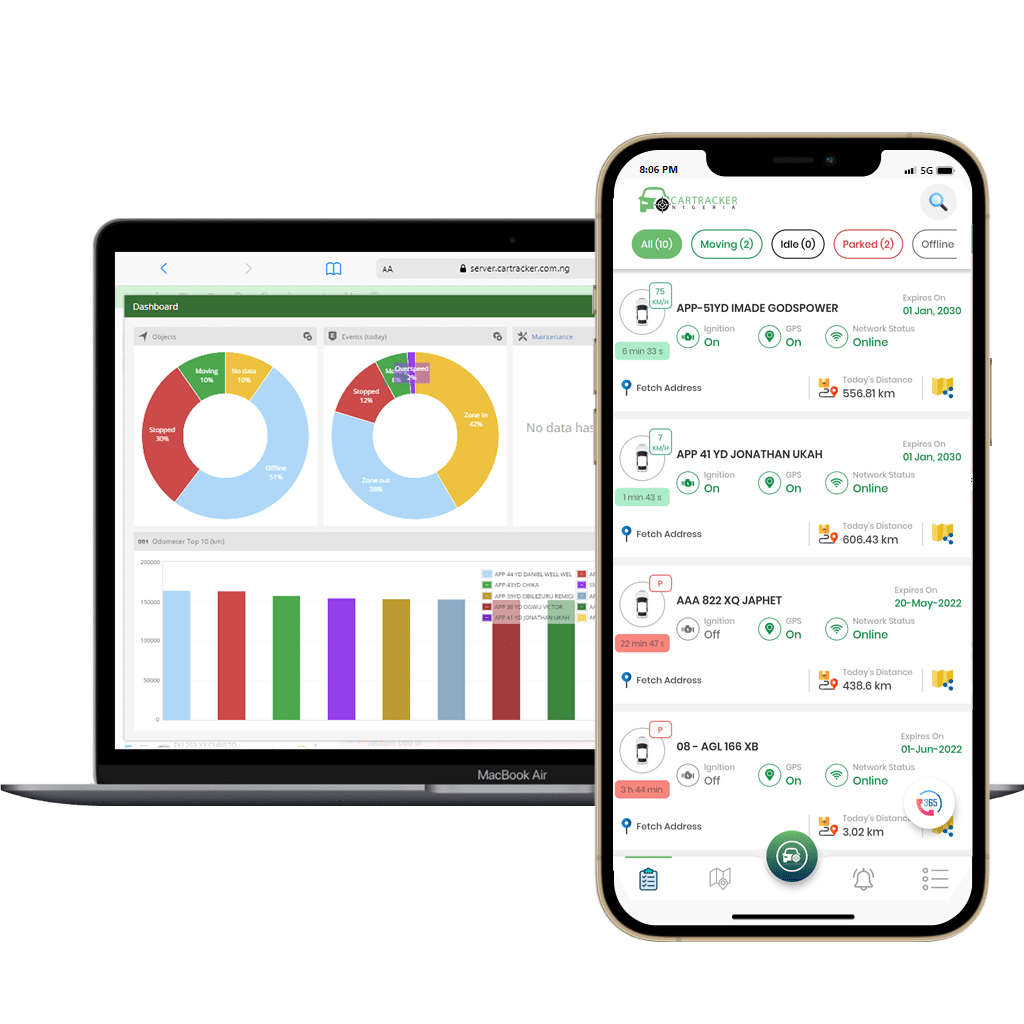
It runs on the same fleet management dashboard as your fuel and routes, so safety is not a separate chore.
Where video telematics comes in
A score tells you a driver braked hard at 2:14pm. A camera tells you why.
Video telematics adds a camera that scores distraction and captures what actually happened, so a near-miss or a disputed accident is settled by footage instead of argument.
That matters when a third party claims your driver caused a crash he did not.
It turns the safety score into evidence, and it is the same setup the strict in-vehicle monitoring system uses for oil and gas compliance.
What it saves
The savings come from three directions at once.
Fewer accidents, so lower repair bills and less downtime. Smoother driving, which cuts fuel and wear on tyres, brakes and engines. And a cleaner safety record, which strengthens your hand on insurance and contracts.
One avoided crash on the Lagos-Ibadan Expressway can outweigh a year of the whole system.
Set against that, monitoring is one of the cheapest lines on a fleet's budget. The wider numbers are in our fleet tracking cost guide.


Frequently asked questions
What is driver behaviour monitoring?
A system that scores how each driver actually drives, using tracker and sensor data: speeding, harsh braking, harsh acceleration, sharp cornering and idling. Each driver gets a safety score you can compare and coach against.
How does a driver safety score work?
The system logs harsh events with time and location and weights them into one score per driver. A driver who speeds and brakes hard scores worse than one who drives smoothly. You use it to reward safe drivers and retrain risky ones.
Does it actually reduce accidents?
Yes. Harsh braking, speeding and sharp cornering are the early signs of a crash that has not happened yet. Coaching against the scores cuts those events, which means fewer accidents, lower repair bills and less downtime.
What does video telematics add?
A camera scores distraction and shows what actually happened in an incident, so a near-miss or disputed accident is settled by footage rather than argument. It turns the safety score into evidence.
The editorial team at Car Tracker Nigeria, drawing on two decades of vehicle tracking, recovery and fleet work across Nigeria to publish practical security guides.
Related guides.