Car tracking is legal in Nigeria when you are tracking your own vehicle. And that covers almost everyone who asks.
People fit GPS trackers every day for security, recovery and fleet management. Nothing stands in the way of doing so on a car you own.
The questions that actually matter sit at the edges. Company vehicles. Staff. The line between protecting your property and watching someone without their knowledge.
Here is how it breaks down.
Tracking your own vehicle
If the car is yours, you can track it. The vehicle is your property, and monitoring your own property for security is squarely legal.
This is the everyday case. A family fitting a tracker to the family car. Someone protecting a vehicle they are still paying a bank loan on. A driver who simply wants the car back if it is stolen.
No special permission is needed for any of it.
The whole point of a tracker is to protect what you own, and the law has no problem with that. When it works, it looks like our recovery case studies.
Tracking company vehicles and staff
Businesses track their fleets all the time. It is legal where the vehicles belong to the company and staff know about it.
The right way to do it is out in the open.
Put a vehicle-monitoring policy in writing. Explain that company cars and trucks carry trackers, and why. Have drivers acknowledge it when they take the keys.
That turns tracking into a transparent condition of using the vehicle rather than something hidden. Most disputes here are not about the tracker being illegal. They are about staff feeling watched in secret, which a clear policy removes.
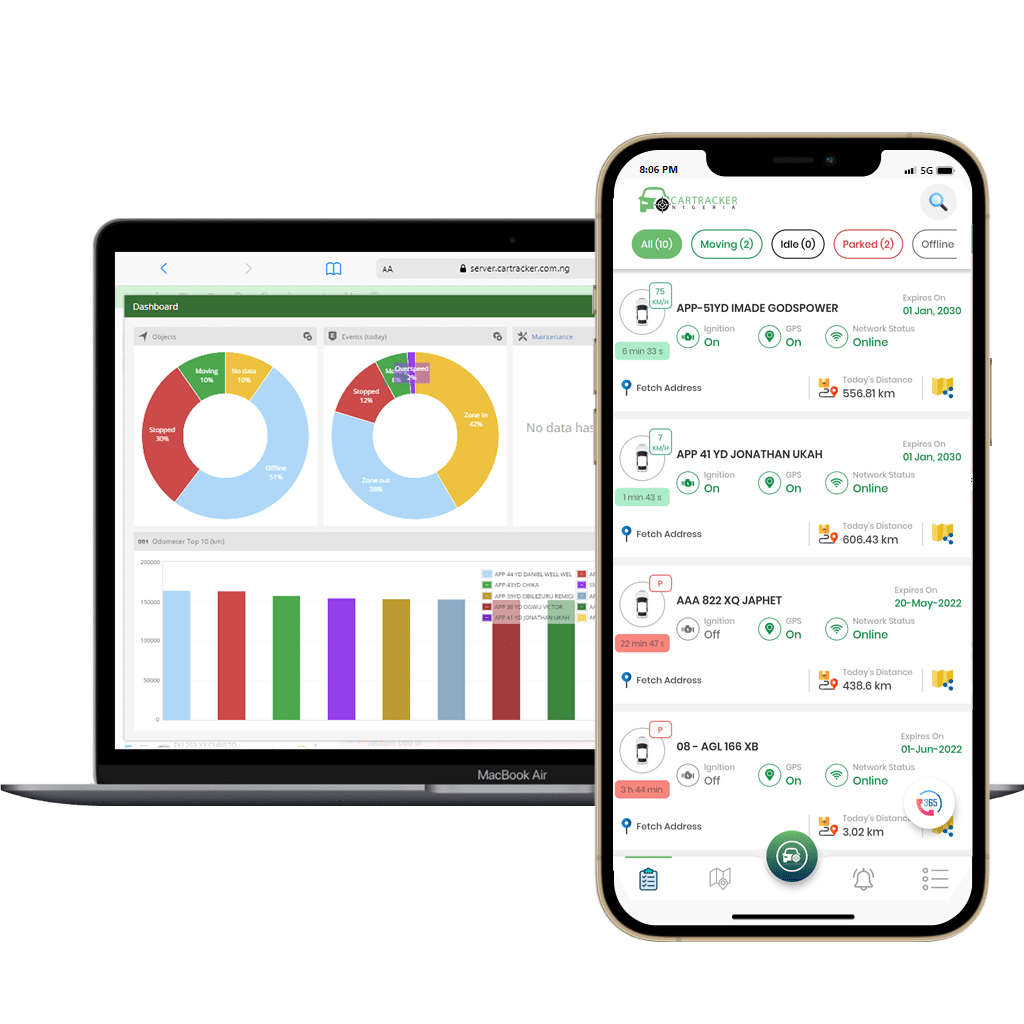
Running a business fleet this way is the norm on our fleet management service, and if you track field staff directly, the workforce tracker is built around the same principle of consent.
The legal line is rarely about the device. It is about whose asset it protects and who was told.
Track your vehicle the right way
Every tracker we fit runs on registered SIMs, with proper records. Send your vehicle details for a firm price.
Get a quote on WhatsAppWhere it crosses a line
The problem starts when someone tracks a person, or a vehicle, that is not theirs, without consent.
Slipping a tracker onto a partner's car, a colleague's vehicle, or anyone else's property to follow them is a different thing entirely.
That can breach the Nigeria Data Protection Act and may land you in real trouble.
The simple test holds in almost every case. Track what you own, or company vehicles covered by a policy people agreed to.
Step outside that and you are no longer protecting an asset. You are surveilling a person, and the law treats those very differently.
Why registered SIMs keep you compliant
There is a quieter legal angle most buyers miss.
A tracker runs on a mobile SIM, and SIMs in Nigeria have to be properly registered under NCC rules.
A serious tracking service uses registered SIMs. That keeps the connection on the right side of the rules and, just as important, stops the unit going dead when unregistered SIMs get blocked in one of the periodic sweeps.
The cheap trackers running on unregistered cards are not only unreliable. They sit in a grey area you do not want your security depending on.
Staying on the right side of it
For a private owner, there is almost nothing to think about. Fit the tracker to your car and you are fine.
For a business, keep it transparent. Track only company-owned vehicles, write a short monitoring policy, and have drivers sign it.
Use a provider that fits registered SIMs and keeps proper records.
Do those things and tracking stays exactly what it should be. A way to protect vehicles and recover them when they are taken, with no legal cloud over it. The pricing is in our car tracker price guide.
This is general information, not legal advice. For a specific situation, especially anything involving staff monitoring or data handling at scale, check with a qualified Nigerian lawyer.


Frequently asked questions
Is it legal to put a tracker on my own car?
Yes. Fitting a GPS tracker to a vehicle you own is legal in Nigeria and is widely used for security, recovery and fleet management.
Can a company track its staff vehicles legally?
Yes, where the vehicles belong to the company and staff are informed through a clear written policy they acknowledge.
Is it legal to track someone without their knowledge?
Tracking a person or a vehicle you do not own, without consent, can breach privacy rules and may be unlawful. Keep tracking to your own assets or company vehicles covered by policy.
Why do registered SIMs matter?
SIMs in Nigeria must be registered. A reputable service uses registered SIMs, which keeps the connection compliant and stops the unit dying when unregistered SIMs are blocked.

The editorial team at Car Tracker Nigeria, drawing on two decades of vehicle tracking, recovery and fleet work across Nigeria to publish practical security guides.