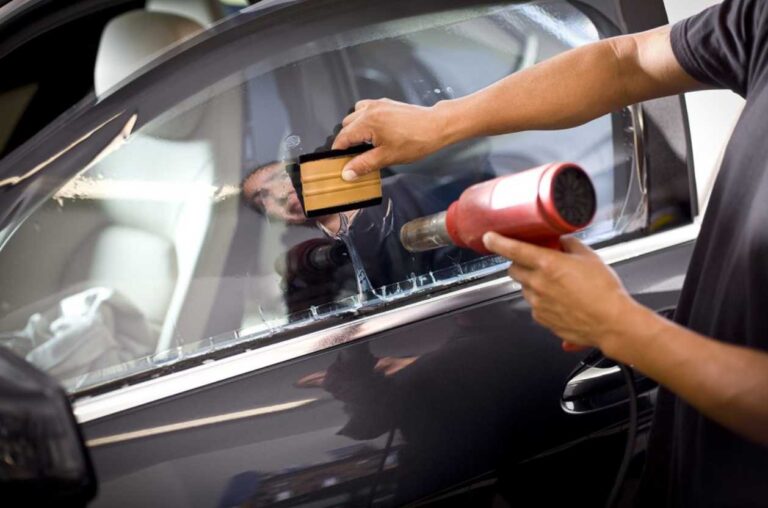
A smash-and-grab is over in seconds. Glass fortification is about taking those seconds back.
An ordinary car window gives way on the first hard blow. The glass is gone, the door is open, and so are you.
Anti-shatter film changes that maths. The window holds, the attacker keeps hitting, and the delay is often enough to end it.
Here is how it works, and who needs it.
What glass fortification actually is
Glass fortification is a thick, clear safety film bonded to the inside of your windows.
It does one job well. When the glass is struck, the film holds the pieces together instead of letting them fall away.
So the window cracks but stays in the frame, and the attacker is left hammering at a sheet that will not give.
That is the whole idea. Not an impenetrable shield, but a delay that turns a quick hit into a problem the attacker does not want.
Where it earns its place on Nigerian roads
The danger is rarely on the open road. It is at the stop.
The junction in slow traffic, the gate at night, the one-chance setup that depends on getting into the car fast. The Nigeria Police Force consistently flags these urban, stationary moments as the high-risk ones.
Fortified glass is built for exactly that moment.
The attack happens where you are slowest. Fortification buys time precisely when you have none.
There is a road-safety bonus too. Film that holds glass together also keeps it from spraying the cabin in a crash, the kind of injury the FRSC sees too much of.
Make your glass work for you, not against you
Tell us your vehicle and your main concern. We will fit anti-shatter fortification, with tint on top if you want it.
Get a fortification quoteHow it differs from tint
People mix these up, and they should not.
Tint is about comfort: heat, UV and privacy. Glass fortification is about security: keeping the window intact under attack.
One cools the car. The other defends it.
The good news is they work together. You can fortify the glass for protection and tint it for heat, and the car window tint guide covers that side.
What it is not
Let me be straight, because the marketing around this gets loose.
Fortification is anti-shatter, not bulletproof. It is not armoured glass, and it will not stop a gun.
What it does is resist repeated blows and slow forced entry through the window, often long enough for the attacker to give up or for you to drive off.
Sold honestly, that delay is the product. Anyone promising bulletproofing from a film is overselling it.
It pairs with a tracker
Fortification and tracking solve two halves of the same problem.
The film helps the car resist the attack at the window. A tracker means that even if the car is taken, it can be found and recovered.
Resist first, recover second. Our recovery case studies show the second half in action.
For anyone exposed on risky routes, the two together are the serious answer.



Frequently asked questions
What is glass fortification?
A thick, clear safety film bonded to your windows that holds the glass together when struck. Instead of shattering on the first blow, the window stays in its frame, buying the seconds that stop a smash-and-grab or one-chance attack.
How is anti-shatter film different from tint?
Tint is about heat, UV and privacy. Anti-shatter film is about security: thicker, built to keep the glass intact under attack. The two can be combined, with fortification protecting and tint cooling.
Does it make the window bulletproof?
No. It is anti-shatter, not bulletproof. It slows forced entry and resists repeated blows, but it is not armoured glass. Its value is the delay it creates, which is often enough to end an attack.
Who needs glass fortification in Nigeria?
Anyone exposed in slow traffic or on risky routes: executives, families, night drivers, and anyone who has felt unsafe at a junction. It pairs naturally with a tracker, so the car resists the attack and can still be recovered if taken.

The editorial team at Car Tracker Nigeria, drawing on two decades of vehicle tracking, recovery and fleet work across Nigeria to publish practical security guides.
Related guides.