You cannot manage what you cannot see.
That sounds like a poster on an office wall, until the day your dispatch van does a three-hour detour you only hear about because a customer complained.
By the time a problem reaches your ears in a fleet, it has already cost you money. Fleet management closes the gap between what happens to your vehicles and what you find out.
And for most Nigerian businesses, the savings are not abstract. They are diesel.
The trust gap, and why it gets expensive
A one-vehicle operation runs on trust, because you can watch it yourself.
The moment you put a second and third vehicle on the road, you are trusting people you cannot see, on roads you are not on, with fuel money you handed over in good faith.
Most drivers are honest. The few who are not only need the gaps, and a growing fleet is full of gaps.
A dashboard removes the gaps. It does not assume the worst of anyone. It just makes the truth visible to everybody, which has a way of keeping everybody straight.
Fuel is where the real money goes
Ask any Nigerian fleet owner what keeps them up and the answer is diesel.
Manual fuel logs are guesses dressed as records, and the tank is a black box the GPS cannot see into. A trader running five buses out of Oshodi can lose a serious slice of monthly fuel to siphoning and short-delivered refuels, and the paperwork will still add up.
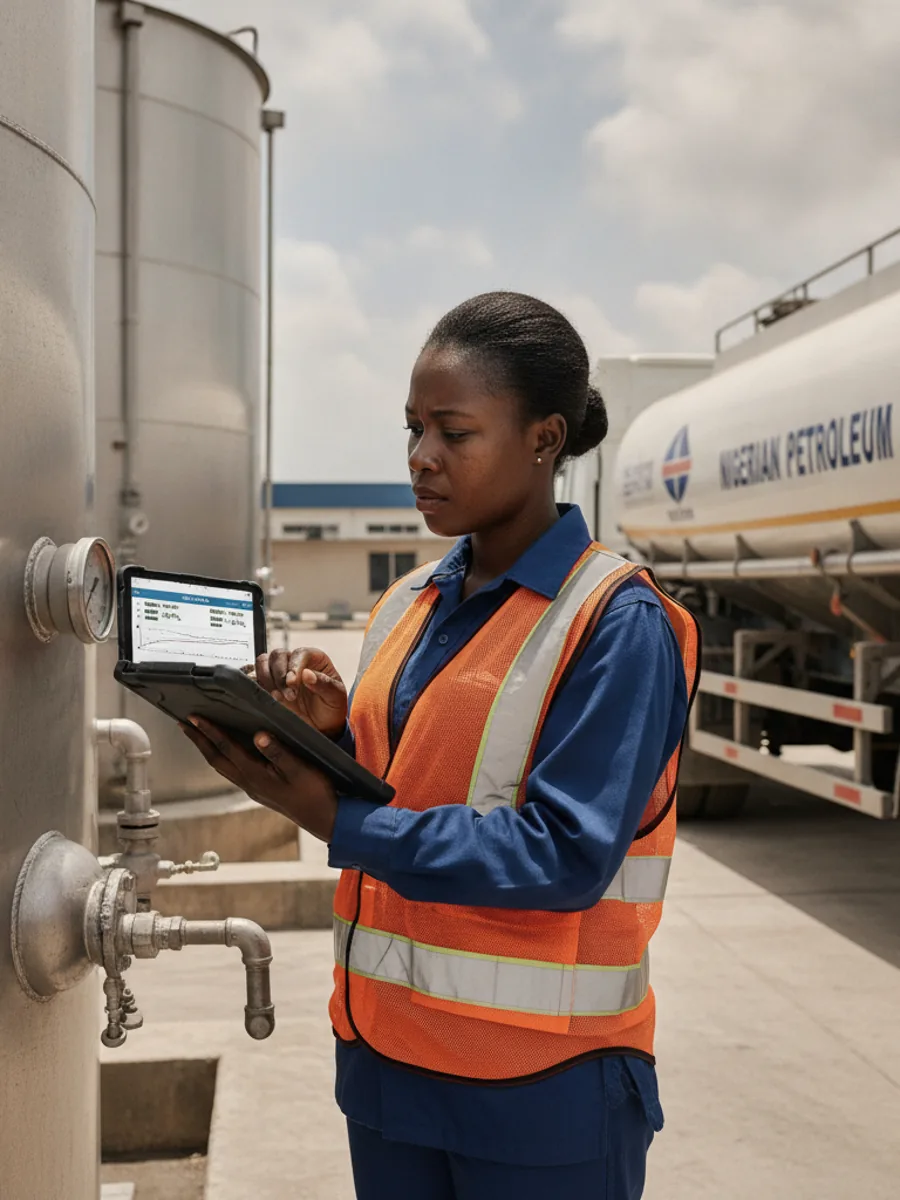
Fuel monitoring puts a calibrated sensor in the tank. It reads the level every few seconds and reports over an NCC-registered SIM.
When fuel leaves without the engine using it, you get an alert with the location and the litres. Operators commonly watch fuel anomalies fall 15 to 25 percent inside two months.
That one number usually pays for the whole system.
Fuel theft is not a moral problem you solve with a meeting. It is a visibility problem you solve with a sensor.
See what your fleet is actually doing
Tell us your fleet size and what your vehicles carry. We will scope the right setup and quote per vehicle, with the renewal stated upfront.
Get a fleet quote on WhatsAppTime, routes and the trips nobody approved
After fuel comes time, which is just fuel and wages in a different shirt.
A vehicle idling outside a relative’s house for an hour is burning money you will never see on a fuel log. A delivery that should run Surulere to Lekki in ninety minutes taking half a day means a driver doing private runs on your diesel.
Geofencing flags the vehicle the second it leaves the zone it should stay in. Trip history shows the route it took against the route you gave.
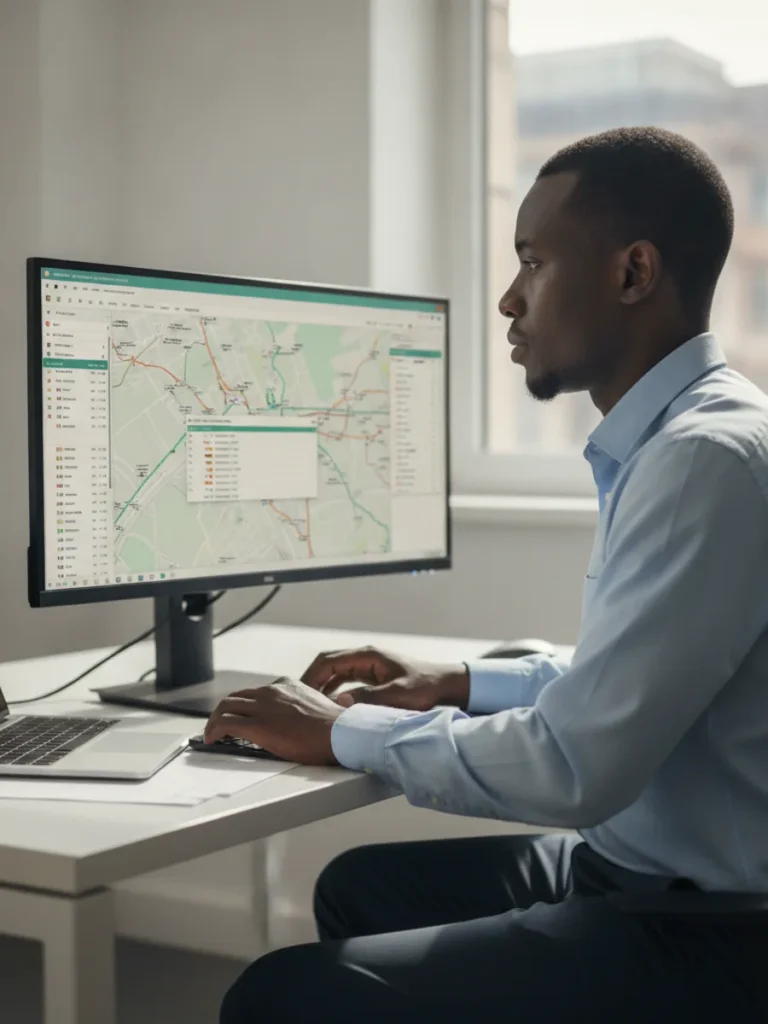
None of this needs a confrontation. It needs a screen you can check on a Monday.
Downtime, safety and the bill you do not budget for
The breakdown on Third Mainland Bridge is the one nobody plans for, and it is always more expensive than the service that would have prevented it.
Fleet management tracks service intervals and flags a vehicle before it strands a load.
On safety, harsh braking and speeding are the early warning for the accident that has not happened yet. Video telematics turns those habits into a score you can coach against.
One avoided crash on the Lagos-Ibadan Expressway can outweigh a year of subscription.
Everything on one screen
The benefit that ties the rest together is simple: one place to look.
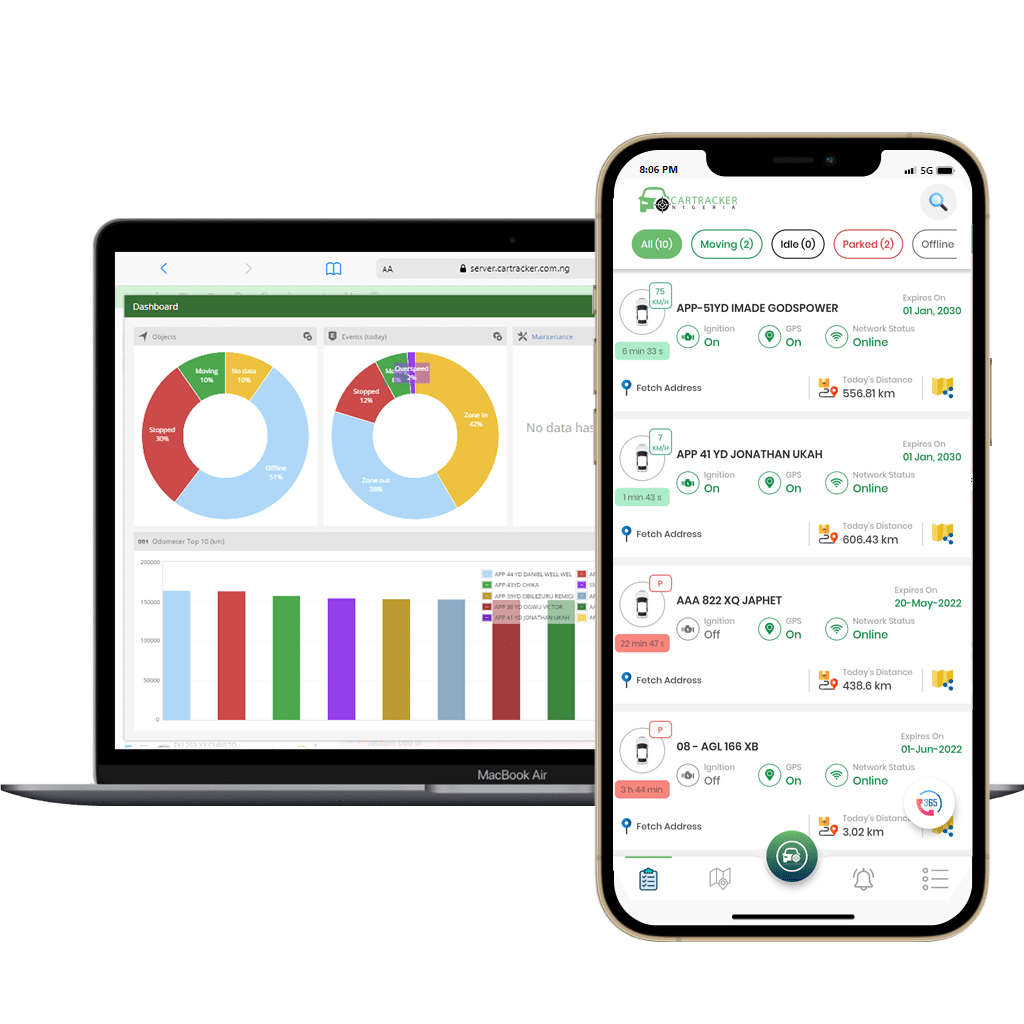
A fleet dashboard puts location, fuel, driver behaviour and maintenance for every vehicle behind one login, with the right people seeing the right view.
The alternative is what too many operators end up with: a drawer of different devices from different sellers, and an app for each that never agree.
We unpack the full setup and pricing in the fleet management guide.
When you actually need it
The honest threshold is the point where you can no longer keep every vehicle in your own head. For most owners that lands around three to five.
Below that you can still feel a problem coming. Above it, the problems hide in the spaces between vehicles, and that is exactly where they grow.
If you run trucks, the case comes earlier, because a single haulage load is worth more than the system that protects it.
Start with truck tracking and fuel monitoring, and add from there.


Frequently asked questions
What is the main benefit of fleet management?
Visibility. You see fuel, location, driver behaviour, idle time and maintenance for every vehicle on one dashboard, so you manage on facts instead of trust. The biggest single saving for most Nigerian fleets is stopping fuel theft.
At what fleet size do I need it?
Around three to five vehicles, the point where you can no longer watch every vehicle yourself. If you run trucks, the case comes earlier because one load outweighs the system that protects it.
How much does it save?
Fuel is the largest line, and fuel anomalies commonly drop 15 to 25 percent within two months. With fewer side trips and less downtime, most fleets cover the cost inside one to three months.
Does it work for trucks and vans?
Yes. The same dashboard covers trucks, vans, buses and cars, with add-ons like fuel monitoring and video for heavier vehicles.
The editorial team at Car Tracker Nigeria, drawing on two decades of vehicle tracking, recovery and fleet work across Nigeria to publish practical security guides.
Related guides.