
For most fleets in Nigeria, the biggest cost is not the trucks. It is the diesel.
And a chunk of that diesel never moves a single load. It is siphoned at night, burned in long idling, or quietly skimmed at the pump.
Fuel monitoring exists to make that loss visible. Once you can see it, you can stop it.
Here is how it works, what it costs, and how fast it pays back.
Where the fuel actually goes
Ask a fleet owner where their diesel disappears and most cannot say. That is the whole problem.
The leak comes from three places. Siphoning straight from the tank when the truck is parked overnight. Long idling, where the engine runs for an hour at a depot and burns fuel while the vehicle sits still.
And the pump trick, where a driver pays for sixty litres, pockets the difference, and puts forty in the tank.
None of it shows on a normal tracker. A map tells you where the truck is, not how much fuel is in it.
What a fuel sensor actually does
Fuel monitoring adds a sensor inside the tank that reads the real fuel level, second by second.
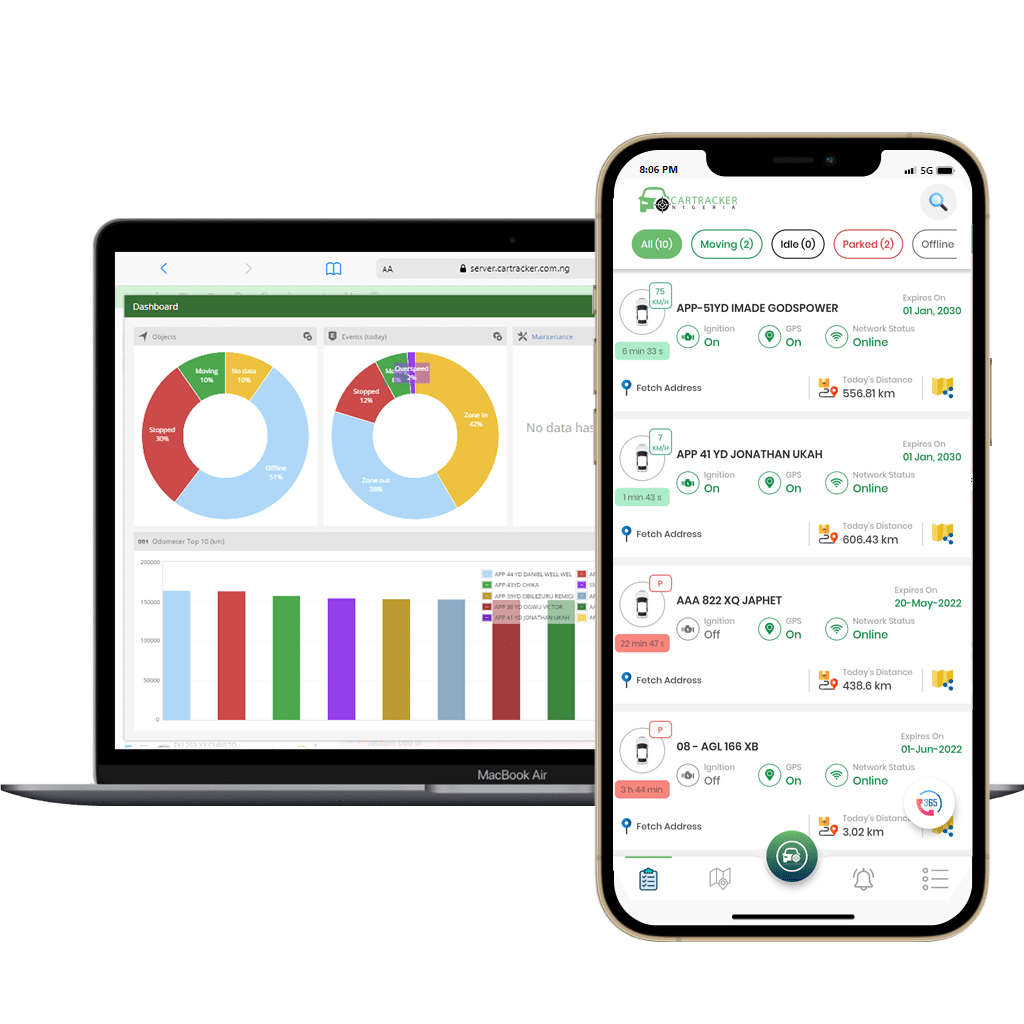
That reading goes to the same dashboard as the tracker. So fuel and location sit on one screen, lined up in time.
When the level drops while the truck is parked, you get an alert with the time and the place. When a refill is smaller than the receipt claims, the graph shows it.
The theft that used to be invisible now has a timestamp and a location.
You cannot stop a leak you cannot see. The sensor is what makes it visible.
Stop paying for fuel you never burn
Tell us how many vehicles you run and where the diesel is leaking. We will fit fuel monitoring where it pays back fastest.
Get a fuel monitoring quoteWhy it matters more now
Diesel is not the price it was two years ago.
Since the downstream market the NMDPRA oversees was deregulated, the pump price moves with the market, and the National Bureau of Statistics diesel price watch has tracked it well above old levels.
So every litre lost costs more than it used to.
A loss you could shrug off in 2022 is a real hole in the margin today. That is why fuel monitoring went from a nice-to-have to the first thing serious operators fit.
What it costs and how fast it pays back
Fuel monitoring is priced per vehicle, on top of the base tracker.
Budget around ₦650,000 in the first year for a monitored vehicle. That sounds steep until you put it against the loss.
A single truck losing forty or fifty litres a week to siphoning and skimmed refills burns through far more than that in a year.
For a diesel-heavy fleet, the recovered fuel usually covers the system within months. After that, it is money back in the business. The full per-vehicle maths sits in our fleet tracking cost guide.
Where fuel monitoring fits in the bigger picture
Fuel is one leak. A fleet has others.
Driver behaviour, route history, idling and misuse all sit on the same fleet management dashboard, which is why most operators run fuel monitoring as part of a wider setup rather than alone.
If your work is haulage, the features bundle into truck tracking built for that load.
And if you are new to all of this, start with the complete guide to fleet management in Nigeria, then come back to fuel.
How to start
You do not have to fit every truck at once.
Most fleets start with their thirstiest vehicles, the ones where diesel is the biggest line and the loss is worst. Watch the dashboard for a month.
Once the savings show up, rolling it out to the rest is an easy decision.
Tell us your fleet size and your worst-hit routes, and we will fit the fuel monitoring where it pays back fastest.


Frequently asked questions
How does fuel monitoring stop diesel theft?
A sensor in the tank reports the real fuel level to the same dashboard as the tracker. When fuel drops while the truck is parked, or a refill is smaller than the receipt says, you get an alert with the time and place.
How much does a fuel monitoring system cost in Nigeria?
It is priced per vehicle and runs around ₦650,000 in the first year, on top of the base tracker. For a diesel-heavy truck, the fuel it recovers usually covers that within months.
Does it catch idling as well as siphoning?
Yes. It flags long idling, siphoning from the tank, and short-changed refills. All three show up on the dashboard with time and location.
Is it worth it for a small fleet?
If diesel is your biggest cost, yes, even on three or four vehicles. Most small operators fit it to their thirstiest trucks first and add the rest once the savings are clear.

The editorial team at Car Tracker Nigeria, drawing on two decades of vehicle tracking, recovery and fleet work across Nigeria to publish practical security guides.
Related guides.