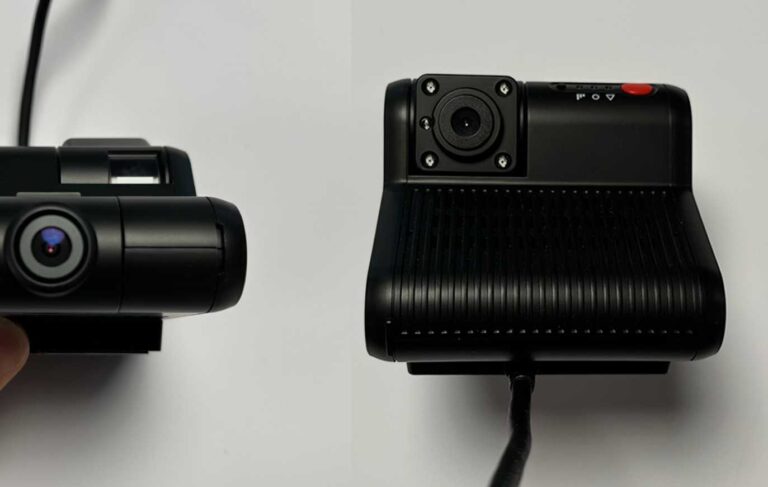
A dashcam is only worth buying if its footage stands up the day you need it.
Plenty of cheap units record video that is useless: too soft to read a plate, too dark at night, dead when you check it.
A few specs separate a camera that protects you from one that just sits on the glass.
Here is what actually matters, and what to ignore.
Dashcam prices in Nigeria in 2026
Price tracks features, and the gaps are clear.
Across the market, a basic dashcam runs about ₦60,000 to ₦100,000, a standard HD unit ₦120,000 to ₦200,000, and a dual-camera front and rear system ₦200,000 to ₦300,000.
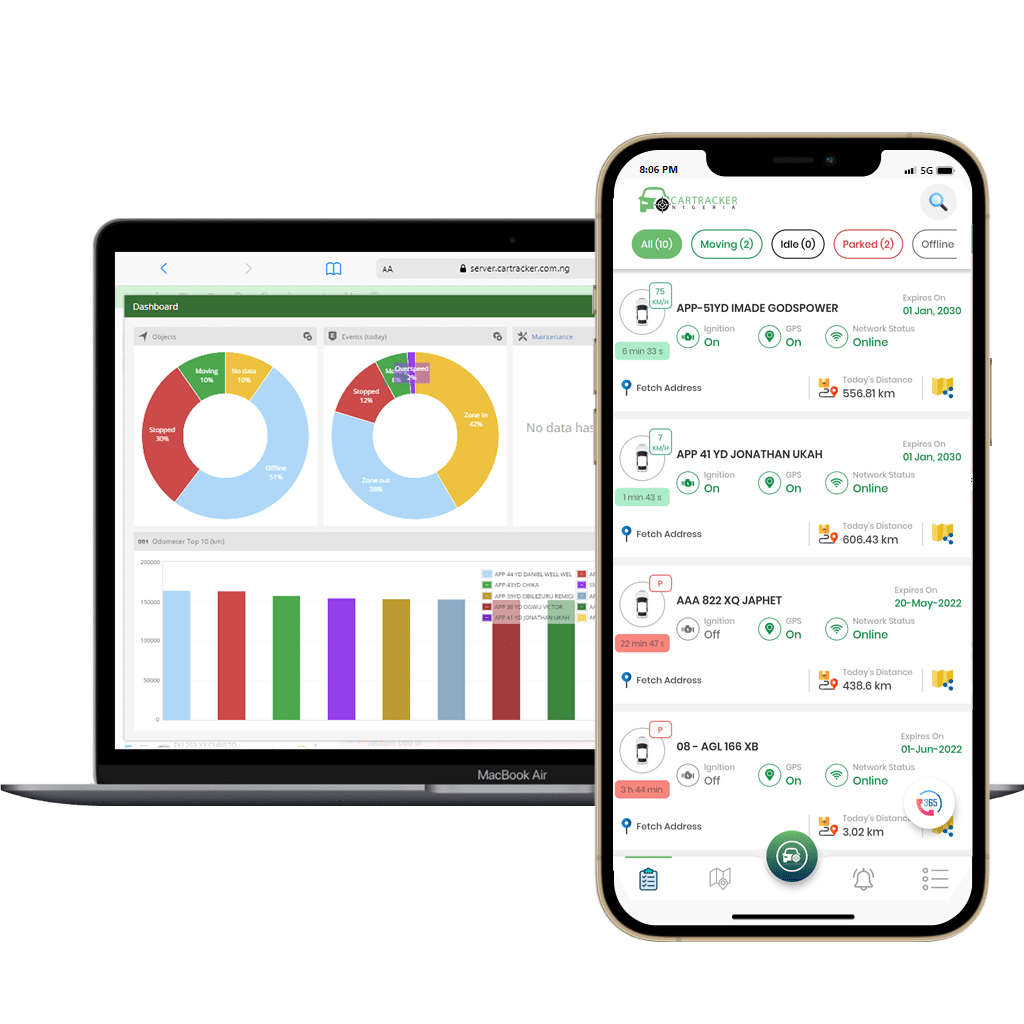
At Car Tracker Nigeria, the single-channel front camera is ₦150,000 fitted and the two-channel front and rear is ₦250,000. Both are 4G, so beyond recording to the card you can live stream the camera and track the car on a map from a paired GPS screen.
Installation is one-time. Each dashcam then renews at ₦40,000 a year, covering 12 months of 4G data, the SaaS platform fee and the service charge. Whatever you buy, the install is the part that makes it reliable, which is why ours is hardwired by default.
You are not just paying for a camera. You are paying for footage that holds up the day you need to prove what happened.
Resolution: 1080p is the floor
The single job of a dashcam is to capture detail you can use, and that means reading a number plate.
1080p Full HD is the practical minimum. Below it, plates blur into guesswork, especially at distance or speed.
2K or 4K is sharper and reads plates further away, which the broader dashcam market keeps pushing, but a good 1080p camera beats a cheap 4K one every time.
Buy on the quality of the sensor, not just the number on the box.
Night performance is half the test
This is where cheap cameras quietly fail.
A lot of incidents happen at dusk, at night or in poor light, exactly when a weak camera turns the road into a smear.
Strong low-light performance matters more than a big daytime resolution figure, because footage you cannot read after dark is no evidence at all.
A dashcam that only works in daylight is a dashcam that works half the time. Test it on the night, not the spec sheet.
Get the right dashcam, fitted right
Tell us your vehicle and how you drive. We will recommend the camera that suits it and install it cleanly, parking mode and all.
Get a dashcam recommendationParking mode: the feature people skip and regret
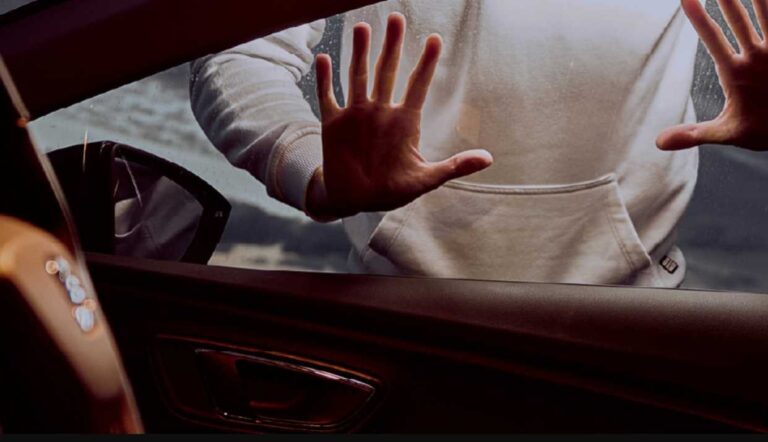
Most of the damage to a parked car has no witness.
Parking mode keeps the camera watching while the car is off, so a knock in a car park or someone tampering with the vehicle is caught.
It needs a hardwired install to draw power safely, which is why it is often left off cheap setups.
For a car you leave in public lots, this is the feature that earns the upgrade.
Front-only or front and rear
A single front camera covers most of what you need.
A dual-channel front-and-rear setup adds protection against rear-end collisions and disputes behind you, which matters in heavy Lagos traffic where you get knocked from behind.
Match it to your risk. Long highway runs and dense traffic make the rear camera worth it.
City pottering, the front alone is usually enough.
Storage and reliability
The unglamorous part decides whether the footage is there when you look.
Use a good-quality, high-endurance memory card sized for your resolution, and check that the camera loop-records cleanly so it never simply stops.
A cheap card in a good camera is a common reason footage is missing at the worst moment.
Set it, then check it works every so often.
The install is part of the camera
Even the right camera fails if it is fitted badly.
A clean hardwired install powers it reliably, enables parking mode, and leaves no dangling cables or flat battery.
We fit the dashcam properly and set parking mode up, and the wider reasoning sits in our professional dashcam guide and the in-car safety tech guide.
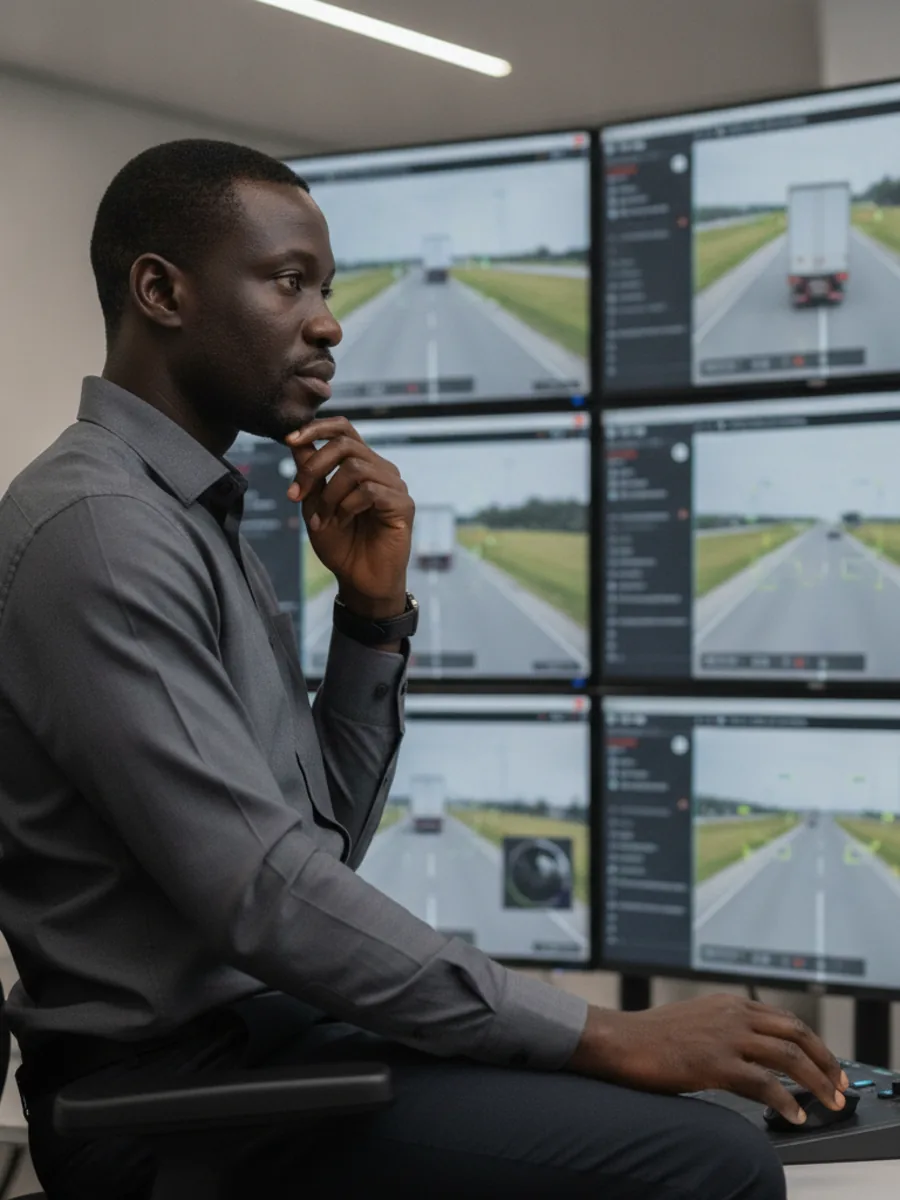
For fleets, the same need scales into video telematics.


Frequently asked questions
What resolution dashcam should I buy?
1080p Full HD is the practical floor, because below it you cannot reliably read a plate. 2K or 4K is sharper and reads plates further away, but a good 1080p camera beats a poor higher-resolution one.
Does night performance matter?
Yes, a lot. Many incidents happen at dusk, night or poor light, so a camera that produces dark, smeary footage after sunset is useless when it counts. Look for strong low-light performance.
Do I need a front and rear dashcam?
A front camera covers most needs. A dual-channel front-and-rear setup adds protection against rear-end collisions and disputes behind you, which is worth it in heavy traffic.
Why does the install matter?
A clean hardwired install powers the camera reliably, enables parking mode, and avoids dangling cables or a drained battery. A poorly fitted dashcam often fails on the night you need it.

The editorial team at Car Tracker Nigeria, drawing on two decades of vehicle tracking, recovery and fleet work across Nigeria to publish practical security guides.
Related guides.