Fleet tracking in Nigeria is priced per vehicle, not as one lump sum. That is the first thing to understand before you budget.
Each vehicle carries a cost much like a single car tracker. On top of that, you choose the features the fleet actually needs.
The number on the invoice is real. But for most operators it is small against what the system stops leaking out of the business every month.
Here is how the maths works.
How fleet tracking is priced
Think of it per vehicle.
Each truck, bus or van takes its own tracker, with a first-year cost in the same range as a private car, from around ₦100,000 depending on the unit.
Then an annual renewal of around ₦35,000 keeps the data, the platform and support running for that vehicle.
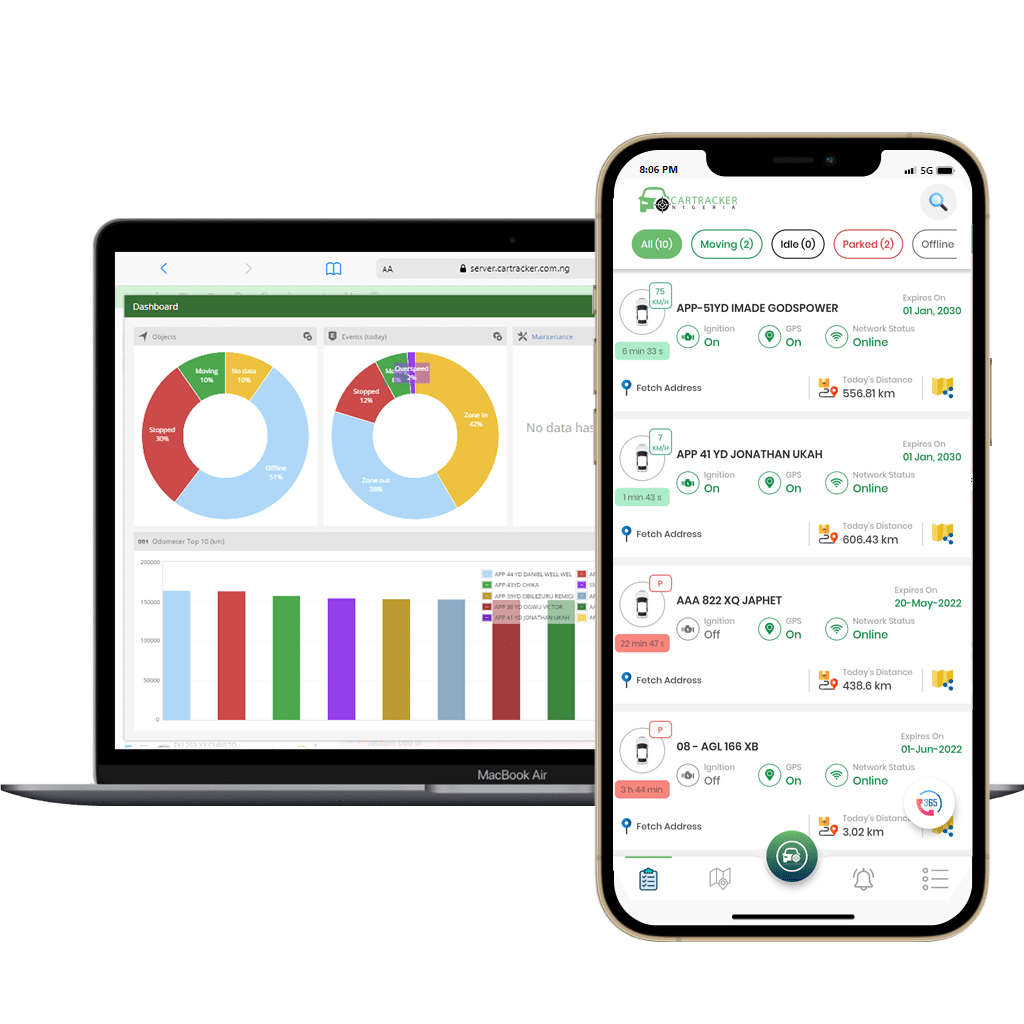
Where a fleet differs from a single car is what sits on top: shared features and one dashboard for the whole yard instead of a separate app per vehicle.
For the underlying per-vehicle figures, the car tracker price guide and the renewal breakdown both apply here.
What a fleet tracker adds over a basic one
A single-car tracker answers one question: where is my car.
A fleet tracker answers the questions a business actually loses money on. Which driver is burning fuel. Who is speeding on the Lagos-Ibadan Expressway. Which truck has been idling for an hour at a depot. Which vehicle went somewhere it had no business going.
All of it lands on one screen, in our fleet management dashboard.
So you manage twenty vehicles with the effort you used to spend on two.
The fleet cost is per vehicle. The fleet saving is across every vehicle at once.
Get a fleet quote built around your vehicles
Tell us how many vehicles you run and what is costing you most. We will price it per vehicle, with the features that matter.
Request a fleet quoteThe features that pay for themselves
Not every add-on earns its place. But a few usually do.
Fuel monitoring is the big one. For a fleet where diesel is the largest line item, it exposes siphoning and idling that quietly drains the budget.
With pump prices set by the deregulated market the NMDPRA oversees, every litre saved counts for more than it did two years ago. The fuel it recovers often covers the whole tracking bill within months.
Driver-behaviour scoring cuts accidents and wear by flagging the harsh braking and speeding that wreck vehicles, the same habits the FRSC fines on the highway.
Route history settles disputes about where a truck actually went. And if you run heavy goods, truck tracking bundles the features built for that work.
Small fleet or large fleet
A small operator with three or four vehicles usually starts simple. Trackers on every vehicle, fuel monitoring on the thirstiest, and the shared dashboard.
A larger fleet of trucks or buses leans harder on driver behaviour, route planning and the management software that ties depots together. That is where fleet management software comes in.
The per-vehicle logic holds at any size.
What changes is how many features each vehicle carries and how much the dashboard is doing for you.
What to budget
Plan around the per-vehicle base first. Roughly ₦100,000 first year and ₦35,000 renewal for each vehicle, then add the features that target your biggest leak.
A fleet losing money to fuel should price in monitoring from day one. A fleet with an accident or insurance problem should weigh driver behaviour and dashcams.
The honest way to get a real figure is to tell us the fleet size and what is hurting. We build the quote around that rather than a one-size number.
Most operators find the system pays back faster than they expected, because the leaks it closes were bigger than they thought.
Running a fleet? Start with our complete guide to fleet management in Nigeria.


Frequently asked questions
How much does fleet tracking cost in Nigeria?
It is priced per vehicle. Each vehicle carries a first-year cost from around ₦100,000 plus an annual renewal of around ₦35,000, with features like fuel monitoring added per vehicle.
Is fleet tracking cheaper per vehicle than a single car?
The base hardware and renewal per vehicle are broadly the same. The advantage is one shared dashboard and the money the system prevents from leaking across many vehicles.
What features add to the cost?
Fuel monitoring, driver-behaviour scoring, route history, sensors and dashcams each add per vehicle. Most fleets add the ones targeting their biggest leak, usually fuel.
Does fuel monitoring pay for itself?
For diesel-heavy fleets, often yes. By exposing siphoning and idling, the recovered fuel typically outweighs the tracking cost within months.
The editorial team at Car Tracker Nigeria, drawing on two decades of vehicle tracking, recovery and fleet work across Nigeria to publish practical security guides.
Related guides.